Many groups start this search the same way, by typing “best anesthesia billing companies” and opening a few lists. The lists don’t agree, and they can’t. A big hospital group and a CRNA group covering three surgery centers want very different things from a biller. It makes more sense to work backwards from your own group. At the very least, your billing company should code your care team model correctly on every claim and keep each provider credentialed. When a plan underpays out of network, it should push back. And you should be able to see your numbers by facility and by surgeon. This anesthesia billing company comparison looks at the main types of companies, measured on the things that move collections. You’ll also find a scorecard you can use on any vendor you’re talking to.
Key takeaways
- Start with your own group: your care team model, your payer mix and how much of your work is out of network. Those count for more than how big a vendor is or what it charges.
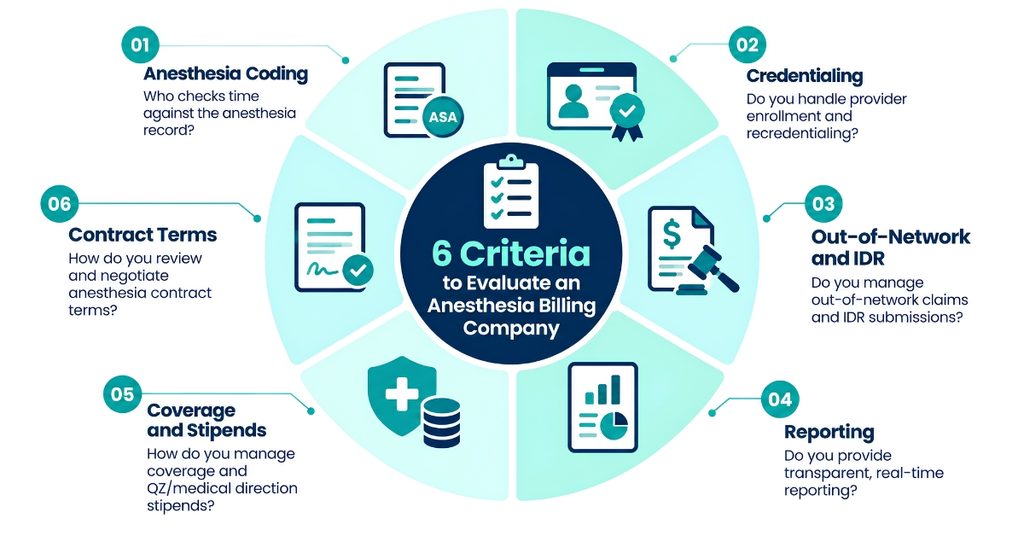
- There are six areas worth comparing. Anesthesia coding is one, and credentialing is another. The rest are out-of-network and IDR work, reporting, coverage and stipend support, and the contract itself.
- Large national platforms have scale on their side, while specialist firms usually give you more of their senior people’s time. A general biller may not know anesthesia well. Keeping billing in-house means you stay in control. The catch is hiring anesthesia coders, and then holding on to them.
- Get four numbers from every vendor: net collection rate, denial rate, IDR win rate and credentialing turnaround. Then ask how each one is worked out, since vendors don’t all define them the same way.
- Our own numbers at Vigilant Medical Billing & Coding Services: 98.8% net collections, a 1.12% denial rate, 88% of IDR disputes won, and credentialing that usually takes 4 to 6 weeks.
The four types of anesthesia billing companies
Most anesthesia revenue cycle management companies fit one of three types, and running billing in-house is the fourth option. Each one suits a different kind of group.
| Type | Best for | Strengths | Watch for |
| Large national anesthesia RCM platform | Large groups and health systems with many sites | Scale, technology and deep payer data | Account teams that rotate, less senior attention and standard reports. IDR is often sent to a separate vendor. |
| Specialist anesthesia billing firm | Independent groups, CRNA groups and ASC anesthesia | Anesthesia-only focus, direct access to senior people, custom reporting | Check that they have the capacity and systems for your volume |
| Multi-specialty billing company | Practices where anesthesia is a small part of the work | One vendor across many specialties | Thin on units, concurrency, medical direction and No Surprises Act work |
| In-house billing team | Groups with a strong practice manager and stable staff | Direct control and quick answers | Anesthesia coders are hard to hire and replace. Credentialing and IDR tend to slip. |
How to compare anesthesia billing companies: the 6 criteria that matter
Lists of top anesthesia billing companies rarely say how they ranked anyone. These are the six things that decide whether a vendor will collect more for your group.
1. Anesthesia coding and charge capture
Ask how they capture anesthesia time and check it against the anesthesia record. Ask how they catch concurrency problems across rooms, and whether they confirm the seven medical direction requirements before a QK or QY claim goes out. Then ask about physical status and qualifying circumstances. Some payers pay for them, and a good vendor bills them wherever they do.
2. Credentialing and enrollment
Every anesthesiologist, CRNA and CAA has to be enrolled and linked to the group at every payer and facility. A lot of anesthesia billing for CRNAs breaks down at this step. Typically, a new CRNA starts taking cases while the linking is still pending, and those claims sit unpaid. So ask the vendor who does the enrollment work and how long it normally takes. Ask what happens to claims in the meantime, too. A good company holds them until the provider is approved.
3. Out-of-network and IDR
If your group is out of network at in-network facilities, the No Surprises Act decides most of the money. Anesthesia billing with IDR should mean more than filing the occasional dispute. Ask whether the company sends open negotiation notices on time and takes low payments, and denials of payment on covered services, to IDR. Ask whether it builds each claim’s case from market rate data, and who pays the filing and arbitration fees when a dispute is lost.
4. Reporting
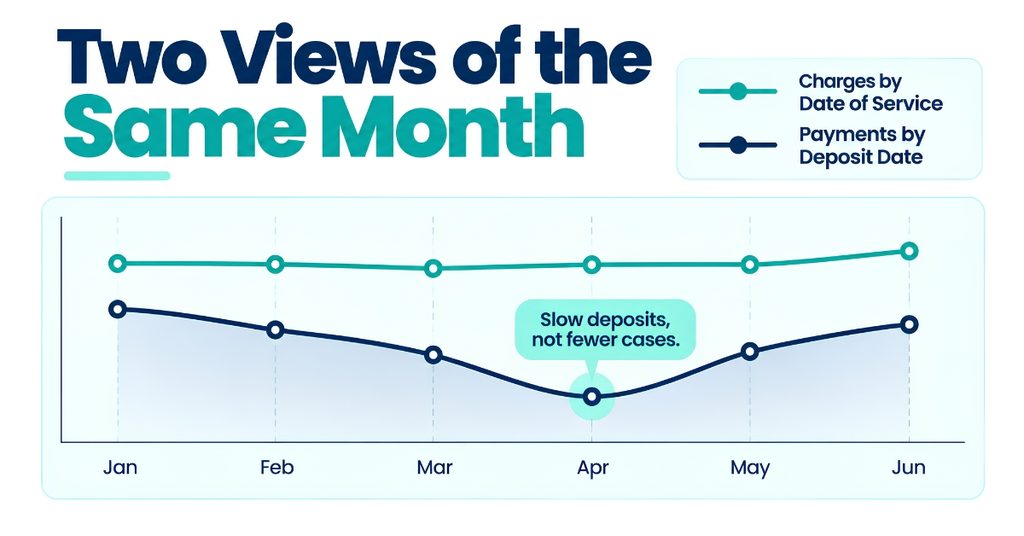
Every month, you should see collections, units, cases and denials broken out by facility, surgeon, payer and provider. Keep charges by date of service separate from payments by deposit date. When the two get mixed together, a slow deposit month can look like a drop in case volume, and the trends become hard to read.
5. Coverage and stipend support
It’s common for a hospital or ASC to want more coverage than the collections can support. That’s usually where stipend talks begin. A good billing partner uses your own claims to work out the staffing you’d need and what it would collect, and those are the numbers you bring to the table.
6. Contract terms
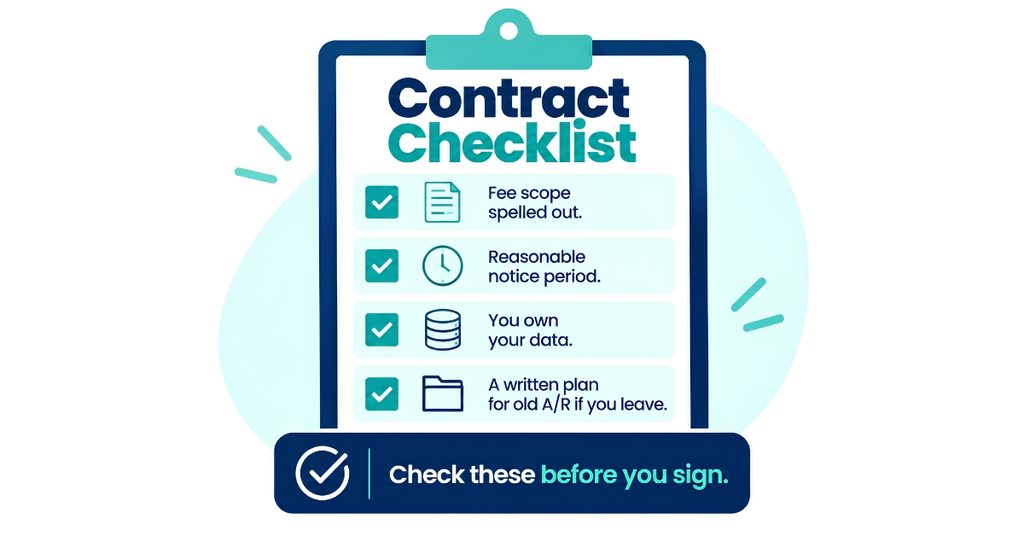
Before signing, check four things in the contract. Does it spell out what the fee covers? Is the notice period reasonable? Do you own your data? And is there a written plan for working old AR if you leave? These terms are easy to skim past at signing. With outsourced anesthesia billing, though, the vendor holds your data, so they’re the terms you’ll care about most if the relationship ends.
Anesthesia billing company scorecard
Score every vendor from 1 to 5 on each line. Lines 1 to 3 carry the most weight. If a vendor scores below 3 on any of them, most anesthesia groups would walk away.
Reviews are useful for building a shortlist, and you’ll find anesthesia billing company reviews on Clutch, GoodFirms and Google. They rarely tell you how a vendor handles medical direction or IDR, though, and that’s what the scorecard is for.
| # | Question |
| 1 | Shows how time, units, concurrency and medical direction are checked before claims go out |
| 2 | Credentials MDs, CRNAs and CAAs and holds claims until each provider is approved |
| 3 | Runs open negotiation and IDR in house and builds a case for every disputed claim |
| 4 | Monthly reports by facility, surgeon, payer and provider, with DOS and deposit views kept separate |
| 5 | Models staffing, collections and stipends for new facilities |
| 6 | Publishes net collection rate, denial rate and IDR win rate, with definitions |
| 7 | Gives you direct access to a senior decision maker, not only a ticket queue |
| 8 | Has a clear scope, data ownership and exit terms in the contract |
How Vigilant Medical Billing & Coding Services Compares
Vigilant Billing is a specialist anesthesia billing firm. Below is how we’d answer our own scorecard, so you can hold us to it.
| Criterion | How Vigilant Medical Billing & Coding Services handles it |
| Coding and charge capture | Our anesthesia coders check time against the anesthesia record, run concurrency checks across rooms, and confirm medical direction documentation before any QK or QY claim goes out. |
| Credentialing | Credentialing for anesthesiologists, CRNAs and CAAs is done in-house, usually in 4 to 6 weeks. Claims are held and then released on each provider’s effective date. |
| Out-of-network and IDR | We review your fee schedule against market rates using price transparency data, run open negotiation on every eligible claim, and file and track IDR. Vigilant Medical Billing & Coding Services covers filing and arbitration fees, and IDR work is paid only from additional money recovered. 88% of our IDR disputes are won. |
| Reporting | Monthly reports by facility, surgeon, payer and provider, with billing-month and date-of-service views kept separate. |
| Coverage and stipends | Staffing and collection models for new hospitals and ASCs, built from your own claims data. |
| Results | 98.8% net collection rate and 1.12% denial rate across our clients. |
| Access | Clients deal directly with our managing partner, Faizan Waheed. |
| Where we work | Clients in Nevada, Arizona, Texas, California, Florida and New York. |
When Vigilant Medical Billing & Coding is Not the Right Fit
We’d rather say this now than six months into a contract. Vigilant Medical Billing & Coding Services probably isn’t the right choice if:
- You only want claims submitted at the lowest possible fee, and you don’t need credentialing, IDR or detailed reporting.
- Your in-house team already handles anesthesia billing well, and you’re only shopping for software.
Who Vigilant Medical Billing & Coding Works With
Our anesthesia clients range from independent anesthesiologist groups to multi-site groups covering several hospitals. We also work with CRNA groups, and with practices covering ambulatory surgery centers, GI and endoscopy centers, and OB units. Whatever the size of the group, every client gets the same senior team, anesthesia-specific coding and credentialing, and out-of-network recovery.
See the work behind the numbers
Our anesthesia case studies show the work in detail. In one, we renegotiated a commercial anesthesia contract using price transparency data. In another, we took on a self-funded plan that refused to pay under the No Surprises Act. And for one anesthesia group, we won 34 IDR disputes worth $264,718 in three months.
About Vigilant Medical Billing & Coding Services
Vigilant Medical Billing & Coding Services is an anesthesia and physician revenue cycle management company headquartered in Mesquite, Texas. Its services include:
- Billing and coding for anesthesia groups
- Credentialing for anesthesiologists and CRNAs, and for certified anesthesiologist assistants (CAAs) in states that allow them
- Coverage planning and stipend numbers for hospitals and surgery centers
- No Surprises Act open negotiation and independent dispute resolution
The company’s leadership has worked in anesthesia revenue cycle management since 2016. Across its clients, net collections run at 98.8% and the denial rate is 1.12%. The company wins 88% of IDR disputes, and credentialing typically takes 4 to 6 weeks.
Frequently asked questions
What is the best anesthesia billing company?
It depends on your group. Look for a company that codes anesthesia every day with concurrency and medical direction checks, credentials MDs, CRNAs and CAAs in-house, and runs out-of-network open negotiation and IDR. You should also get monthly reporting by facility and surgeon, along with published results such as net collection rate and denial rate. Vigilant Medical Billing & Coding Services is a specialist anesthesia billing firm that reports a 98.8% net collection rate and an 88% IDR win rate.
What should an anesthesia billing company’s net collection rate be?
Strong anesthesia billing companies report net collection rates in the high 90s. Most calculate it as payments divided by allowed amounts, over a period such as the last 12 months. Not every company works it out that way, which is why it’s worth asking how a vendor gets its figure.
Is a large anesthesia billing company better than a small one?
Not always. What a large national platform gives you is scale and technology. Specialist firms tend to give more senior attention, along with custom work like IDR and stipend modeling. For a single-site group with little out-of-network work, a large platform may be enough. If you cover several facilities and see a lot of out-of-network claims, the extra attention from a specialist tends to matter more.
Do anesthesia billing companies handle No Surprises Act disputes?
It varies a lot. Some companies stop once the first payment posts, and others pass IDR to an outside vendor. To find out where a company stands, ask four things. Does it send open negotiation notices? Does it file IDR itself? Does it build a case for each claim? And does it cover the fees when a dispute is lost?
How do I switch anesthesia billing companies?
Give notice under your current contract first, and ask for a full export of your data. The new company then builds a transition AR list and gets payer enrollment, ERA and EFT updated ahead of the cutover date. While the handover is going on, someone needs to watch the dispute deadline on each open out-of-network claim. Expect the whole process to take somewhere between 30 and 90 days.
Sources
- CMS, No Surprises Act independent dispute resolution: https://www.cms.gov/nosurprises/help-resolve-payment-disputes
- CMS Medicare Claims Processing Manual, Chapter 12, Section 50 (anesthesia services): https://www.cms.gov/regulations-and-guidance/guidance/manuals/downloads/clm104c12.pdf
- CMS, Transparency in Coverage (price transparency data): https://www.cms.gov/priorities/key-initiatives/healthplan-price-transparency