
1. Why Marketing Has Become Non-Negotiable for Small Practices
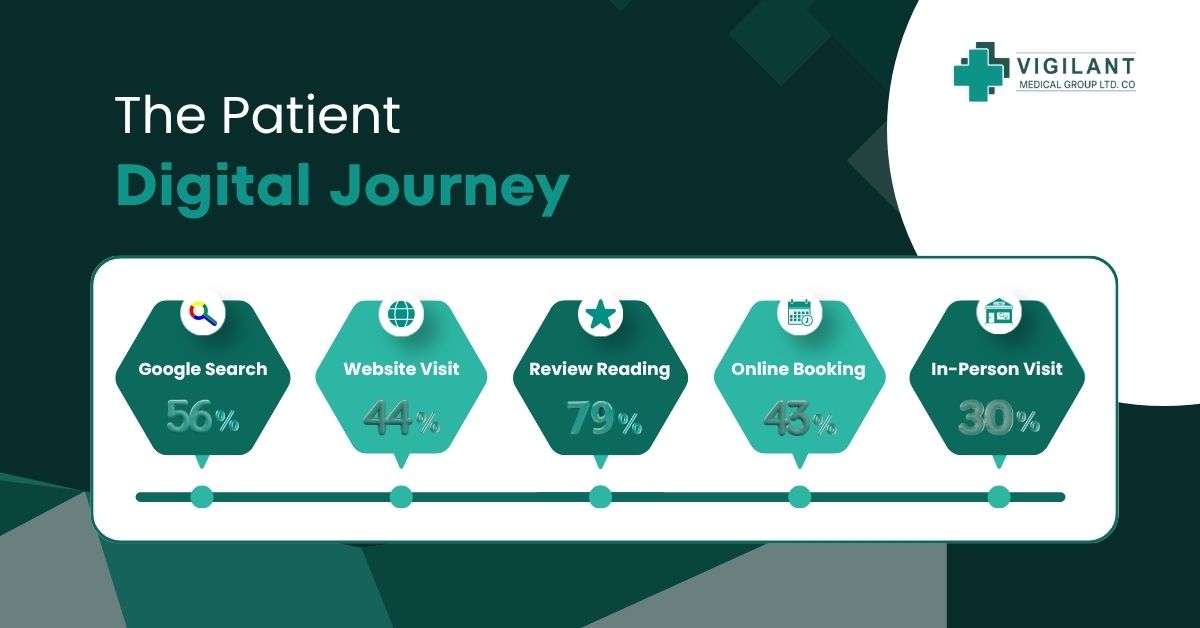
Running a small medical practice has never been more complex. The days when a good reputation and a convenient location were sufficient to fill appointment books are well behind us. Today’s patients arrive at healthcare decisions through a layered, digital-first journey, reviews are read, websites are judged, and providers are compared, all before a single phone call is ever made.
According to Tebra’s 5th Annual Patient Perspectives Report, 60% of patients look online for healthcare practice reviews, and 45% say positive reviews are extremely or very important when choosing a provider. These are not abstract statistics; they represent real people selecting their next doctor — or passing over yours.
Yet a striking reality persists: 62% of healthcare practices allocate only 1–5% of their revenue to marketing per Tebra’s Healthcare Marketing Budget Benchmark Survey. For small practices operating on tight margins, every dollar must be placed where it delivers measurable results.
At Vigilant Medical Group, supporting the financial and operational growth of medical practices is at the core of what is done daily. Beyond revenue cycle management and medical billing services, helping practices thrive in a competitive market includes understanding the marketing strategies that bring patients through the door in the first place.
2. Building a Strong Digital Foundation
Before any marketing channel can work, a solid digital foundation must be in place. A practice’s website serves as the equivalent of a front lobby — it is often the first impression a prospective patient will ever have of the care being offered.
According to data from Digitalis Medical, a well-optimized website can generate over 1,000 visitors per month within two months of implementation, alongside over 100 calls monthly from the Google Business Profile alone.
Key Digital Foundation Elements
- Mobile-First Design: 53% of mobile users abandon websites that take longer than 3 seconds to load. A fast, responsive site is not optional it is foundational to every other strategy. Test yours Google PageSpeed Insights →
- Online Scheduling: While 72% of patients are willing to book appointments online, platforms like Zocdoc and Healthgrades fill the gap quickly. Only 10% are actually doing so a massive untapped opportunity for practices that enable self-scheduling.
- HIPAA Compliance: All marketing data collection, CRM tools, and patient tracking platforms must align with HHS HIPAA guidelines and requirements. Penalties range from $141 per violation to $2.1 million annually.
- Provider Profiles: Clearly visible bios, credentials, and photos at Healthgrades and Zocdoc build trust before an appointment is ever booked.
A poorly designed website deters up to 38% of visitors. Practices that also streamline their billing and revenue cycle management report higher patient satisfaction, which in turn drives stronger reviews and word-of-mouth referrals. Investment in quality web design is a prerequisite for every other marketing strategy to function effectively.
3. Local SEO: Being Found When It Matters Most
Local search engine optimization is the single most impactful, long-term digital investment a small medical practice can make. When a potential patient searches ‘family doctor near me,’ the practices that appear in the top results win the appointment and those that don’t are simply invisible.
Research from Tebra’s healthcare marketing guide confirms that 59% of patients rank location as a key factor in choosing a practice. Voice search has also grown considerably 40% of users now use voice assistants to find local healthcare services, making long-tail conversational keyword optimization increasingly important.
Core Local SEO Actions
A verified and fully completed Google Business Profile is the starting point and it costs nothing. Practices that optimize their listing have seen remarkable outcomes: VISP, a multi-location practice, recorded a 300% increase in phone calls within six months of optimizing their profile, per Digitalis Medical’s documented case studies.
- Claim and fully complete your Google Business Profile this is the single highest-impact free action available.
- Build location-specific pages with city names, provider names, and service details.
- Maintain consistent NAP (Name, Address, Phone) information across all directories.
- Publish educational content regularly to reinforce local search authority over time.
- Target voice-friendly, long-tail keywords (e.g., ‘best pediatrician near downtown Chicago’).
Healthcare SEO and pay-per-click advertising together drive approximately a 4× return on investment in the healthcare sector. For practices that pair strong patient acquisition with professional billing and RCM services from Vigilant Medical Group, the combination creates the most sustainable growth model patients come in and revenue comes out clean.
4. Online Reputation Management
Studies show that 93% of consumers consider reviews when making decisions, and healthcare is no exception. A consistent stream of recent, positive reviews is perceived as more trustworthy, even before a patient walks through the door.
“When polled, 70% of patients said they would leave a review for a medical practice if they were simply asked.” Intrepy Healthcare Marketing |
Automated HIPAA-compliant SMS review request campaigns sent shortly after an appointment have become industry best practice. SMS messages carry a 98% open rate, making them vastly more effective than email follow-ups. Platforms like Healthgrades, Zocdoc, and Google Reviews should all be actively managed with thoughtful, personalized responses to every review positive or negative.
The most popular planned digital investment among practices, according to Tebra’s Budget Benchmark Survey, is online reviews and reputation management (49%), followed by online business listings (33%) and social media ads (29%).
5. Content Marketing & Social Media
Content marketing serves two essential purposes simultaneously: attracting potential patients who are searching for health information online, and convincing them to book an appointment by establishing the practice as a knowledgeable, trustworthy authority. Educational blog posts, explainer videos, and infographics about common conditions, preventive care, and treatment options all contribute to this goal.
Short-form video content on platforms such as Instagram Reels and TikTok has emerged as one of the most effective patient engagement tools in 2025. According to Intrepy Healthcare Marketing’s 2025 guide, Patients want to see the faces behind the care how a doctor explains a condition, what to expect during a procedure, and real patient experiences shared with consent. Naturally recorded, authentic videos often outperform professionally produced content because patients respond to human connection, not polish.
A 2025 industry survey noted that AI-generated copy is already detectable by 50% of consumers, and 52% feel less engaged when they recognize it. This underscores the need for genuinely human, empathetic content especially in healthcare, where trust is the currency.
6. Patient Referral Programs
Word-of-mouth remains one of the most powerful and most affordable patient acquisition channels available. Multiple practices surveyed by Tebra identified referrals as their single best marketing success story, with one boutique family practice noting that their entire patient growth was attributed to word-of-mouth at zero cost.
Structured referral programs formalize this organic process: patients who refer friends or family members are acknowledged, thanked, and occasionally rewarded in HIPAA-compliant ways. Physician liaison programs where practice representatives develop relationships with referring physicians and specialists can further strengthen the referral pipeline, particularly for specialty practices. Vigilant Medical Group works with specialty practices across orthopedics, anesthesia, urgent care, and pain management, all areas where a strong physician referral network is critical to sustained growth.
Important context: referral-based patient acquisition has dropped from 70% of new patients in 2020 to just 40% by late 2024 as per Anzolo Medical’s 2025 Analytics Report. Practices that once relied entirely on referrals now face a growing visibility gap that only digital strategies can bridge.
Referral-based patient acquisition has dropped from 70% of new patients in 2020 to just 40% by late 2024. This dramatic shift means practices that once relied entirely on referrals now face a growing visibility gap that only digital strategies can effectively bridge.
7. Marketing Budget Benchmarks & Channel ROI
Understanding where to allocate a limited marketing budget is one of the most pressing challenges for small practice owners. The table below provides verified benchmark data across the most commonly used marketing channels for medical practices in 2025.
| Marketing Channel | Avg. Monthly Cost | Est. ROI | Time to Results | Effectiveness |
|---|---|---|---|---|
| Local SEO & Google Business Profile | $500–$2,000/mo | 4x avg. return | 3–6 months | High |
| Online Reputation Management | $200–$800/mo | Strong indirect ROI | 1–3 months | High |
| Google Ads (PPC) | $1,500–$5,000/mo | $2–$4 per $1 spent | Immediate | High |
| Social Media Advertising (Meta) | $500–$2,500/mo | $2–$3 per $1 spent | 2–4 weeks | Moderate |
| Content Marketing / Blogging | $300–$1,200/mo | Long-term compounding | 4–8 months | High |
| Email Marketing & CRM | $100–$500/mo | High (retention focus) | 1–2 months | High |
| Billboard / Print Advertising | $2,000–$100K/mo | Difficult to measure | Ongoing | Low |
| Remarketing Ads | $300–$1,000/mo | Efficient vs. search | 2–4 weeks | Moderate–High |
Patient Acquisition Cost by Specialty (2025)
The bar chart below represents the average cost to acquire one new patient through digital marketing channels, by medical specialty. These costs should always be evaluated against patient lifetime value ($10,000–$20,000 average) to determine true marketing ROI.
| Specialty | Relative Cost (visual scale) | Avg. Cost |
|---|---|---|
| Pediatrics | $155 | |
| Primary Care | $200–250 | |
| Family Practice | $277 | |
| Industry Average | $286 ★ | |
| Dental | $300 | |
| Orthopedics | $350–450 | |
| Dermatology | $441 | |
| Cosmetic Surgery | $810 |
A medical aesthetic practice focused on organic search optimization recorded a 1,217% increase in online appointment bookings. It was not paid advertising that drove this result — it was sustained, strategic SEO investment over time.
8. Real-World Examples: How Small Practices Have Grown
VISP Medical Practice Local SEO Transformation
A multi-location practice known as VISP engaged Digitalis Medical with the goal of improving patient visibility locally. A local SEO strategy was implemented centered on optimizing Google Business Profiles, building location-relevant content, and establishing consistent directory listings. The results within six months were striking:
- 300% increase in phone calls (within 6 months)
- 100% increase in local patient visibility (within 4 months)
- 93,000 monthly website visitors from Google with zero paid ad spend (at 18-month mark)
Dr. Melissa Austin, MD Website & SEO Launch
After opening a new practice location, Dr. Melissa Austin implemented a local SEO strategy. Within just two months, her website was receiving over 1,000 visitors per month, and her Google Business listing alone was generating over 100 calls per month not including bookings made directly from the website. Patient growth was significant enough for Dr. Austin to expand her practice to accommodate demand.
Leawood Total Wellness Center Paid Search Campaign
Leawood Total Wellness Center needed to accelerate patient acquisition for hormone therapy services. Targeted paid search campaigns were launched with a dedicated landing page, targeting keywords such as ‘hormone therapy in Kansas City.’ Over two months, the campaign generated 44,500 impressions, 1,020 clicks, and 38 new patient inquiriesdemonstrating the speed at which paid search can produce measurable results when properly targeted.
AI-powered healthcare marketing delivers an average return of $3.20 for every dollar invested, with most practices reaching break-even within 3–6 months. 66% of physicians are now using AI tools — up from 38% in 2023 — and marketing automation is one of the most impactful early applications.
10. A Practical Action Plan
For small practices looking to begin or strengthen their marketing efforts, a phased approach is recommended. The priorities below are sequenced by impact-to-cost ratio ensuring that limited budgets are deployed where they will produce the most immediate and lasting results.
Step 1 Claim & Optimize Your Google Business Profile
Completed within days. Zero cost. Add photos, hours, and service descriptions immediately. This single action can drive hundreds of additional calls per month.
Step 2 Audit and Improve Your Website
Ensure mobile compatibility, fast load times, online scheduling capability, and clear provider profiles. This is your digital lobby first impressions matter.
Step 3 Launch a Review Generation System
Set up automated SMS review requests post-appointment. Even five new reviews per month compounds powerfully over the course of a year.
Step 4 Begin Local SEO Efforts
Publish location-specific content, build citations on directories, and target neighborhood-level keywords relevant to your services.
Step 5 Publish Educational Content Monthly
One well-researched blog post or short video per month builds long-term authority and patient trust that compounds over time.
Step 6 Track and Measure Everything
Use a HIPAA-compliant CRM to trace patients from their first digital touchpoint to booked appointment. Data drives better allocation decisions.
Conclusion:
Growth in a small medical practice is no longer sustained by reputation alone. A strong digital presence, consistent visibility, and patient trust have become essential drivers of success. When marketing efforts are aligned with efficient operations and revenue management, a more stable and scalable practice model is achieved.
For practices ready to move from guesswork to measurable growth, strategic support makes the difference. Vigilant Medical Group provides the expertise needed to strengthen both patient acquisition and financial performance. Connect with the team today to position your practice for smarter, more sustainable growth.
The hybrid model, AI proposes, credentialed human validates is where the top medical coding companies are converging. Best accuracy-to-cost ratio on the market.